
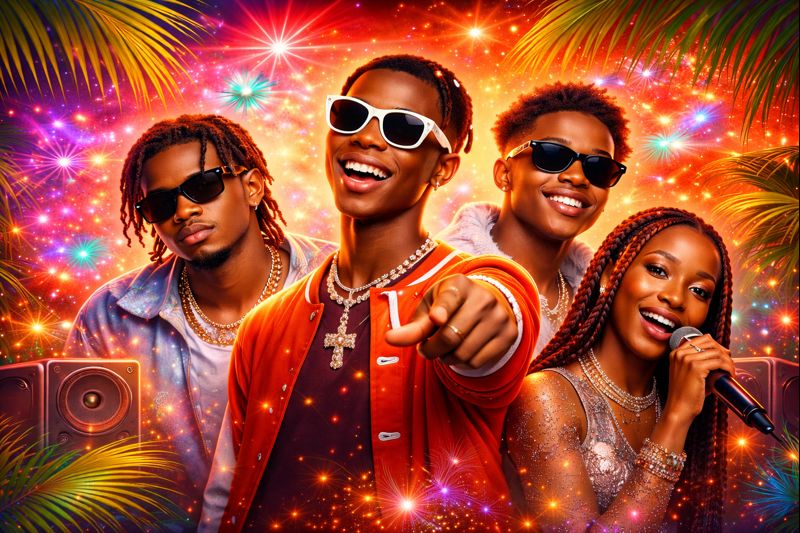
The Future of Afrobeats
Afrobeats didn’t ask for permission to go global. It packed its bags, learned a few new languages, and showed up everywhere with confidence. What started in Nigeria as a sound rooted in rhythm, resistance, and...

The Global Phase
Today’s Afrobeats is fluid. It borrows from Jazz hip-hop, R&B, dancehall, pop, house, and electronic music and then flips the blend into something unmistakably African. Afro-pop, Afro-fusion, Amapiano or Afro-house, these aren’t compromises, they’re evolutions. The sound keeps moving because the culture keeps moving.
And the trajectory is clear: Afrobeats isn’t peaking. It’s positioning.
International success is no longer the exception, it’s the baseline. Afrobeats artists headline global festivals, dominate streaming charts, and collaborate across continents without losing identity. The sound doesn’t travel as a guest anymore; it arrives as a host. Streaming platforms, social media, and digital-first audiences have erased old gatekeepers. A hit in Lagos can become a hit in London, New York, São Paulo, or Seoul within days. Discovery is instant, and momentum is exponential.
Afrobeats didn’t enter the mainstream quietly. It walked in loud, stylish, and humbled but self-assured.
The Big Three
- Wizkid: refined the global aesthetic — smooth, effortless, internationally fluent. He made Afrobeats feel natural on any stage.
- Davido: delivered scale and energy — stadium-ready hits, mass appeal, and undeniable presence.
- Burna Boy: expanded the philosophy — turning Afrobeats into Afrofusion, merging history, politics, and global sonics without dilution.
Together, they didn’t just succeed individually, they normalized global dominance. After them, the question stopped being “Can Afrobeats go worldwide?” and became “Who’s next?”
The New Wave
- Rema: represents fearless experimentation. Genre-fluid, internet-native, and unconcerned with old rules.
- Ayra Starr: carries the new voice of Afrobeats, youthful, global, emotionally sharp, and unapologetically modern.
- Victony: brings vulnerability and melody into focus, proving that softness and strength can coexist in the sound.
Beyond them, younger artists across Africa and the diaspora are building careers without borders — shaped by TikTok, playlists, visuals, and community as much as radio or labels. The future Afrobeats star may break out from anywhere, but the DNA remains unmistakable.
As Afrobeats evolves, something important is happening: tradition isn’t being erased. It’s being reinterpreted.
Artists continue to pull from African rhythms, languages, instruments and storytelling, sometimes subtly, sometimes boldly. The future sound isn’t about choosing between roots and progress. It’s about knowing both well enough to bend them.
That balance is why Afrobeats doesn’t feel temporary. It adapts without losing itself.
What Comes Next?
Afrobeats will get bigger. Louder. More diverse. More experimental.
But its real future isn’t measured in charts or awards — it’s measured in confidence. The confidence to lead trends instead of chasing them. The confidence to sound local and global at the same time. The confidence to evolve without asking for validation.
Afrobeats isn’t the future because it’s popular.
It’s the future because it moves like it owns the room.
Join the Conversation
Looking ahead: what do you think will define the next era of Afrobeats, sound innovation, global collaborations, or cultural influence? And which artist do you believe is shaping that future most clearly right now?