
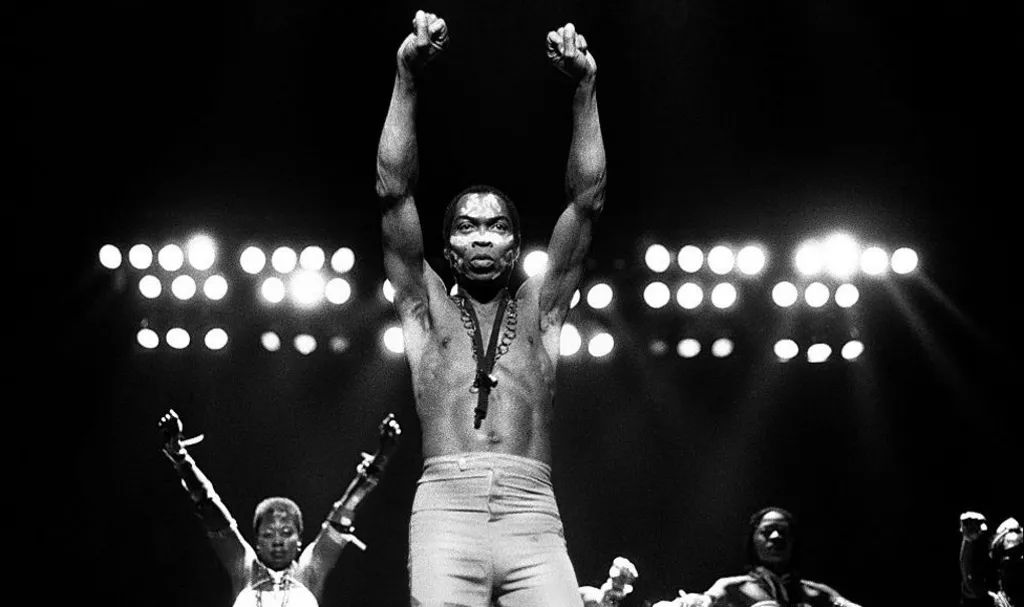
The King of Afrobeat
Afrobeats is the loudest global sound right now — packed venues, viral trends, and a new generation...

The Legend
Fela wasn’t just making music. He was building a whole vibe — a lifestyle, a stance, a standard. The horns weren’t decoration; they were declarations. The grooves weren’t background; they were a message moving through the body. And the voice? That was pressure on power.
His style was disciplined and wild at the same time: long-form arrangements, hypnotic repetition, call-and-response, and a band that sounded like a city at night. He made space for rhythm to breathe, then used that space to say what others were too careful to say.
That’s why Fela hits different in 2026. When Afrobeats gets reduced to just “a sound,” Fela reminds us that the sound is a mindset. Confidence. Identity. Edge. No apology.
Why It Matters
- Vibes: Fela’s DNA is in the swagger — the “don’t rush me” groove, the command of the stage, the crowd control.
- Styles: From horn lines to chant hooks, from percussion layering to performance theatre — he shaped the blueprint.
- Trends: The world is chasing Afrobeats, but Fela shows what happens when you lead a trend instead of following one.
Fela’s music could never be separated from politics because politics came for him first. His open war with Nigeria’s military governments turned his life into a constant confrontation with power — arrests, censorship, beatings, exile attempts, and the violent destruction of Kalakuta Republic. Yet instead of retreating, he doubled down. Each clash sharpened his message and widened his reach.
Songs became court records, albums became case files, and performances became public trials of corruption, colonial hangovers, and stolen futures. The state tried to reduce him to a problem; the people elevated him into a symbol. That tension is exactly what carried his name beyond clubs and campuses into everyday households across Africa and the diaspora.
That defiance left a permanent imprint on Afrobeats culture. Even when today’s artists aren’t explicitly political, they move with a confidence Fela normalized — the audacity to be loud, uncompromising, and globally visible on their own terms.
The freedom in modern Afrobeats, the refusal to shrink, the instinct to speak directly to lived reality, all trace back to a man who proved that sound could challenge authority and survive. Fela didn’t just influence music; he changed the relationship between artist and power. And that lesson continues to travel, beat by beat, through every generation that dares to make noise without permission.
Afrobeats keeps evolving, and it should. But knowing Fela is knowing the roots of the confidence — the reason the sound can walk into any room and own it.
Join the Conversation
In today’s Afrobeats era: what do you feel is the strongest Fela influence — the sound, the stage presence, or the attitude? And who carries that energy the clearest right now?